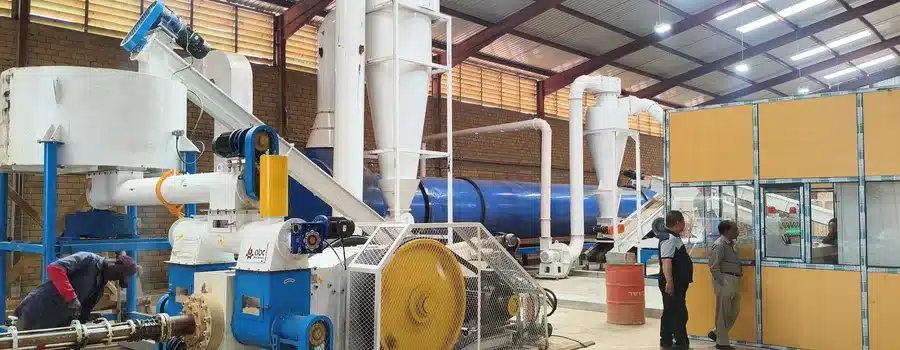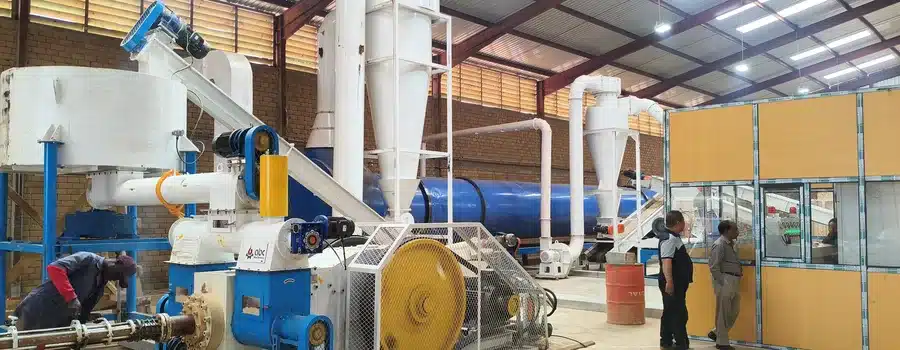
Project Overview of the 2 TPH Wood Briquette Production Line in Tanzania
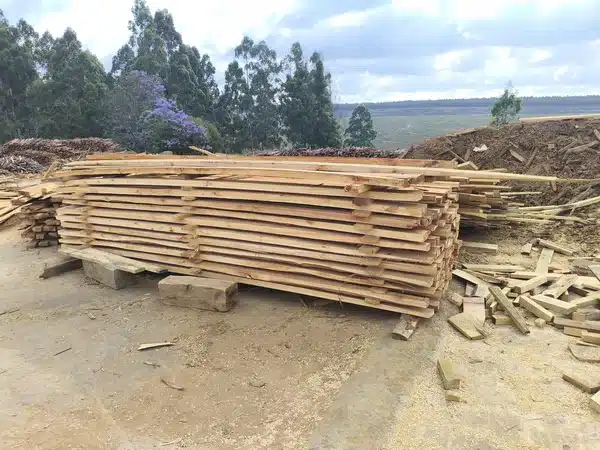
The customer is a timber processing mill in Tanzania’s southern highlands, already running plywood and wood-stick production lines. Sawdust and wood chips are generated in-house as processing residues, which made an on-site briquetting plant the logical way to convert a waste stream into a saleable solid fuel. (read more: sawdust pellet plant)
| Project Item | Specification |
|---|---|
| Plant location | Njombe area, southern highlands of Tanzania |
| Rated capacity | 2 tonnes per hour |
| Feedstock | In-house sawdust and wood chips from timber processing |
| Process sections | Conveying, crushing, rotary drum drying, storage bin, stamping briquette press |
| Forming method | Stamping (piston type) |
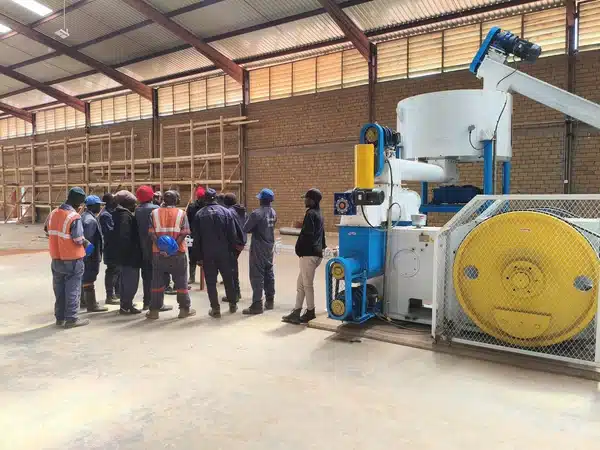
| On-site work | Installation, commissioning, trial production and operator training, November 2025 |
| Supplier scope | Equipment manufacture, shipment, on-site installation, training and spare parts |
If your mill produces a comparable volume of sawdust, the same configuration can be re-sized around your residue output and available floor space. Send us your daily residue tonnage and workshop dimensions, and we will map a line layout against them at no cost.
Process Flow from Wood Chip Crushing to Briquette Stamping
The sawdust briquetting line follows a single main route: raw material to conveying, crushing, conveying, drying, conveying, storage bin and briquetting. What makes this layout worth studying is the dual feeding arrangement designed around the timber mill’s two residue types. (How to Make Rice Husk Briquettes)
- Fine Sawdust PathMaterial already within the required particle range is fed by screw conveyor directly into the rotary dryer, bypassing the crusher entirely and saving the power draw of an unnecessary size-reduction stage.
- Coarse Chip PathOversized chips pass through the crusher first, then join the same drying line, which keeps particle size consistent before material reaches the press.
Crushing and Screw Conveying Section
Particle size set by the wood chipper crusher governs everything downstream. Uniform particles dry evenly in the drum; oversized fragments retain a wet core that later shows up as cracked or crumbling briquettes. Screw conveyors were selected over belt conveyors for the dusty sawdust duty because an enclosed trough contains fines and keeps the workshop air cleaner.
Rotary Drum Drying and Moisture Control
Moisture content is the single most decisive variable in a wood briquette production line. A sawdust rotary dryer sets that variable, and stamping presses generally require feed moisture in the 8-12% band. Above that range, steam trapped inside the die causes the briquette to crack or blow apart on ejection; below it, the natural lignin binding effect weakens and forming pressure rises, accelerating die and ram wear.
Moisture behaviour differs between pine, eucalyptus and hardwood residues, and dryer sizing should follow the species you actually process. Tell us your wood type and current residue moisture, and our engineers will advise the drying capacity your line needs before you commit to a configuration.
Storage Bin and Stamping Briquette Press
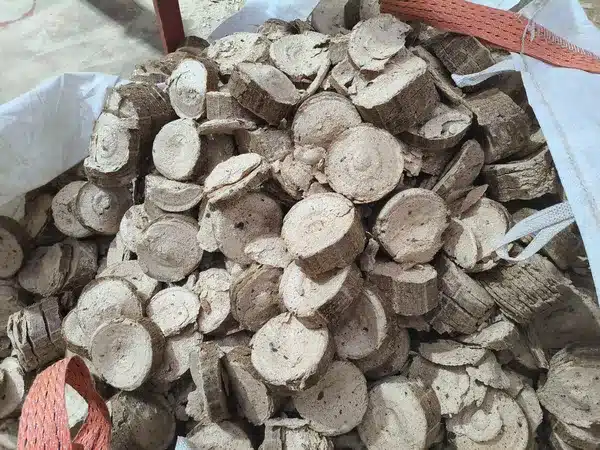
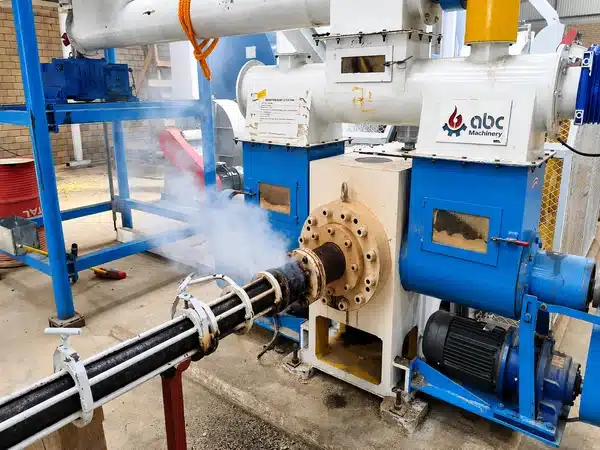
The storage bin between dryer and press is not a passive container, it buffers flow fluctuations so the stamping briquette machine receives continuous, steady feed. Stamping (piston) forming differs fundamentally from screw extrusion: a piston drives material into the die in high-frequency strokes, generating density through impact rather than continuous shear. This gives lower die wear on abrasive wood species and produces the cylindrical briquettes favoured by institutional fuel buyers.
Site Installation and Commissioning of the Briquette Plant
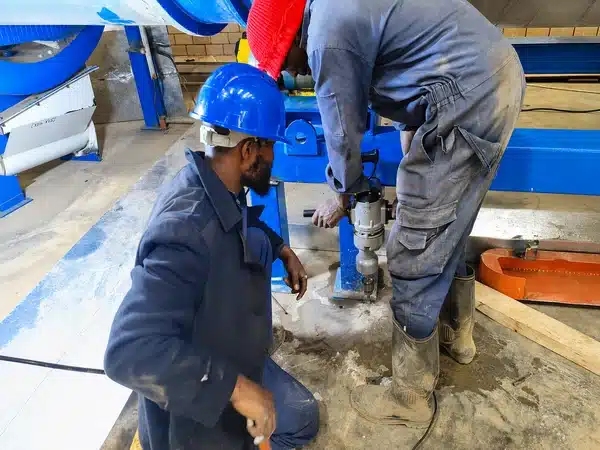
Our overseas service engineers worked on site through the installation and trial production phase, progressing in stages:
- Foundation and Equipment PositioningMachine bases were aligned against the layout drawing so conveyor angles and discharge heights matched between sections.
- Mechanical Assembly and Conveyor LinkingCrusher, rotary drum dryer, conveyors and briquette press were connected in sequence, with attention to sealing at every transfer point to control dust escape.
- Electrical Wiring and No-Load TestingMotor rotation direction, interlock logic and emergency stops were verified before any material entered the line.
- Loaded Trial Run and Product SamplingThe line was fed progressively while operators sampled briquettes for density and surface integrity, adjusting dryer output accordingly.
On-Site Technical Adjustments Made During Commissioning
Two modifications made during commissioning are worth recording, because both are typical of tropical-climate briquetting installations:
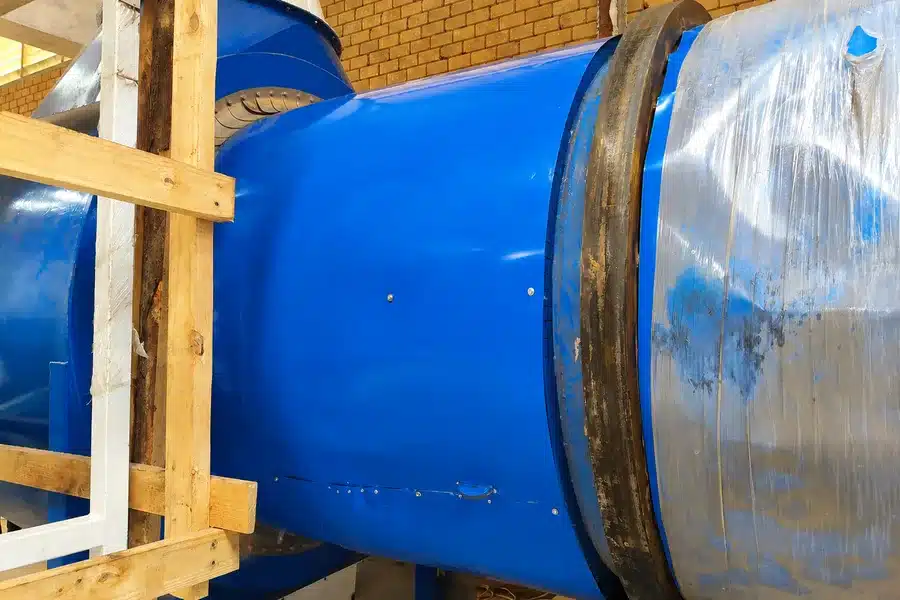
- Enlarged Dryer Fan OutletThe rotary dryer fan outlet proved undersized for the actual airflow demand, restricting exhaust and slowing moisture removal. It was replaced with a larger outlet, restoring the drying throughput the biomass briquetting plant was designed for.
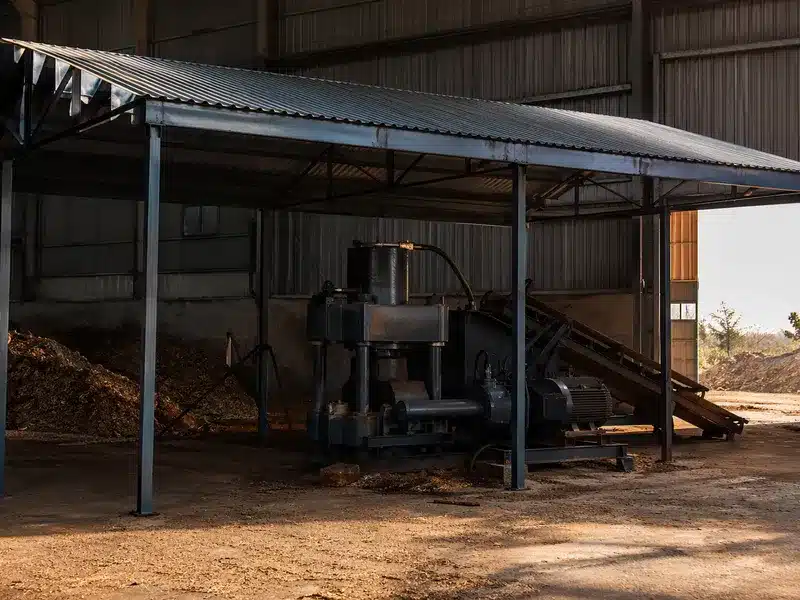
- Reinforced Press CoolingAmbient heat plus stamping friction pushed press temperatures higher than expected. A roof structure was built to shade the piston briquette press and the air outlet direction was changed to improve heat dissipation around the die area.
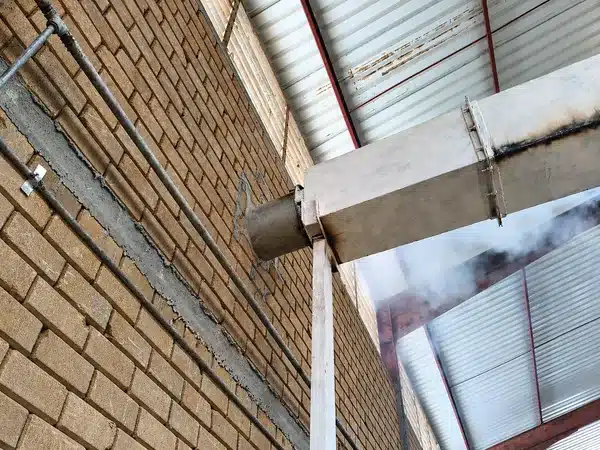
We also flagged one item to the customer for follow-up: the circulating water system needs better sun protection, since prolonged direct exposure raises coolant temperature and undermines the cooling loop’s effectiveness.
Climate-driven adjustments like these are easier to design in than to retrofit. If your site sits in a hot or high-humidity region, ask us for the ventilation and cooling checklist we apply to tropical installations before the equipment is manufactured.
Operator Training and Project Handover of Wood Briquette Plant
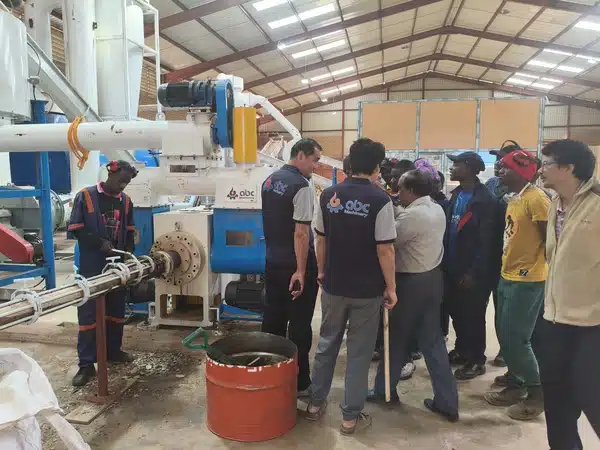
Briquette machine operation training covered start-up and shutdown sequencing, judging feed moisture by hand feel and briquette appearance, die and wear-part replacement, and daily lubrication routines. Spare parts sets were shipped with the briquetting equipment so the mill can replace wear items without waiting on an international order, the single most common cause of downtime in remote briquetting plants.
Biomass Fuel Market Drivers Behind Tanzanian Briquette Projects
Three structural forces explain why timber mills in Tanzania’s southern highlands are adding briquetting capacity.
- Residue Disposal Turns Into RevenueSawmills, plywood plants and furniture workshops generate continuous sawdust volumes that otherwise occupy yard space or are burned off. A sawmill residue briquetting plant converts a disposal cost into a product with an existing local buyer base.
- Pressure on Charcoal Supply ChainsWood charcoal remains the dominant cooking and process fuel across much of East Africa, and tightening forestry regulation makes densified residue fuel a practical substitute that does not require felling standing timber.
- Institutional Fuel DemandTea factories, schools, hospitals and hotels burn fuel in boilers and institutional stoves that accept uniform cylindrical briquettes far more readily than loose biomass, giving mill-scale producers a repeatable commercial channel.
Investment Factors That Shape Wood Briquette Plant Returns
Four variables dominate the economics of any wood briquette production line, and all four are engineering decisions before they are financial ones.
- Feedstock Moisture at IntakeEvery extra percentage point of inbound moisture must be removed by fuel or electricity in the dryer, making intake moisture the largest single lever on operating cost.
- Effective Capacity UtilisationA 2 t/h wood briquette plant only earns at 2 t/h if feedstock supply, power availability and operator shifts sustain it; intermittent running spreads fixed costs across fewer tonnes.
- Die and Wear Part LifeDie life varies with wood species, silica content and particle size control, so wear-part consumption per tonne should be tracked from the first production month.
- Power Consumption per TonneCrushing, drying and stamping each draw significant load; measuring kWh per tonne of finished briquettes exposes which section is drifting out of tune.
Working these four numbers out in advance is what separates a line that pays back from one that idles. Share your feedstock type, target output and local power tariff, and we will return a capacity and connected-load estimate for the line size you are considering.
Request a Capacity and Power Estimate
About the Supplier: GEMCO Biomass Briquetting Equipment
We are GEMCO, a biomass briquetting and pelleting equipment manufacturer based in Anyang, Henan, China, and we are the manufacturer behind the 2 t/h wood briquette production line described in this project report.
- Company profileGEMCO designs and manufactures crushing, drying, briquetting and pelleting equipment for biomass and feed processing at our production base in Anyang, Henan, China.
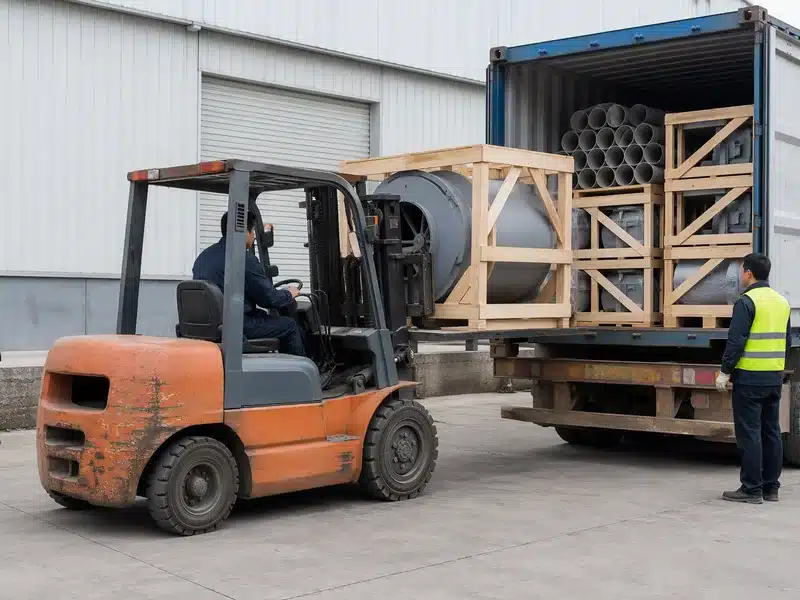
- Service scopeWe deliver complete projects end to end, covering line design, equipment manufacture, sea shipment, on-site installation and commissioning, and operator training at the customer’s plant.
- Export recordOur biomass briquetting and pelleting equipment has been shipped to customers across Africa, Southeast Asia and South Asia, including turnkey lines installed and commissioned by our own overseas engineers.
- After-sales supportWe supply wear parts such as dies and rams together with the original shipment, and provide remote technical support for troubleshooting after handover.
Still deciding between briquetting and pelleting for your residue stream? Send us a description of your material and end-use, and our engineers will tell you which forming route fits before you shortlist equipment.
“