RDF Energy from Recyclables in Municipal Solid Waste
Fuel Performance Contributions of Recyclable MSW Components
Recyclable materials found in municipal solid waste RDF pellets—including plastics, paper, and textiles—significantly influence fuel quality. High-density polyethylene (HDPE) and polypropylene (PP) components, for instance, provide calorific values between 38°C and 46 MJ/kg, while paper and cardboard offer values ranging from 14°C to 18 MJ/kg.
Combustion tests indicate that RDF blends containing over 60% recyclable combustible fractions exhibit combustion efficiencies exceeding 85%, compared to just 70% for raw MSW. Enhanced thermal behavior results in fewer unburned residues and improved energy recovery.
However, emission control is essential. Plastics can increase dioxin and furan levels, while printed paper may release heavy metals. This makes pre-sorting and emission filtering vital to balance high recyclable RDF fuel value with environmental standards.
Unlock the full fuel value of recyclables in MSW—contact us to develop optimized RDF pellet formulations for your system.

Key Role of Waste Sorting Systems in RDF Production

3D RDF Processing Plant Configuration Layout
- Sorting System Integration
Efficient MSW sorting systems are the backbone of RDF production. Mechanical pre-sorting removes large inerts, followed by ballistic separators classifying waste into 2D (films and paper), 3D (rigid plastics, metals), and fines.
- Advanced Automation
Near-infrared (NIR) scanners identify polymer types with over 90% accuracy, while AI-enhanced robotic arms can sort 45–60 items/minute. This reduces contamination rates in RDF to below 7%.
- Inert Removal Technology
Ferrous and non-ferrous metals are removed using magnetic and eddy current separators, while glass and ceramics are excluded using density-based air classifiers.
RDF Yield and Purity Metrics
| Process Stage | Typical Output (%) |
|---|---|
| Recyclable Recovery | 15-25% |
| High-Calorific RDF Feed | 35-50% |
| Non-Combustible Rejects | 20-30% |
- AI-assisted sorting boosts high-CV RDF yield by 12-18%.
- Pre-washing optionality improves downstream processing by reducing odor and residual moisture.
- Inline Moisture Control keeps RDF feedstock below 20% moisture, reducing dryer loads.
Build a high-performance RDF line with smart MSW sorting systems—consult our engineers for equipment selection and line layout support.
Municipal RDF Pelletizing Process Overview
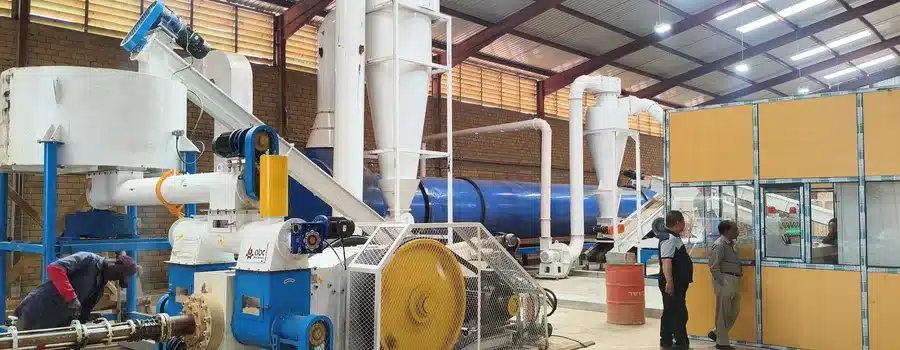
The pelletizing process for MSW-derived RDF begins with fine shredding, typically achieving particle sizes <30 mm. The shredded feedstock is dried to under 15% moisture using rotary dryers with throughput capacities of 2-4 tons/hour.
Compression molding follows, where RDF pellets are formed at 90°C–120°C with die pressures around 180–220 bar. Pellets are cut to 8–12 mm in length and cooled prior to packaging. Binders like starch or synthetic polymers (1–3%) improve cohesion and pellet integrity.
Additive use enhances stability and suppresses odor. Zeolite or bentonite can be introduced at 1-2% levels to absorb volatiles, extending RDF storage life by 30-45 days under ambient conditions.

RDF Processing Plant Converts Municipal Waste Into Fuel
Optimize RDF pellet stability and performance—ask us for a custom additive and binder guide tailored to your MSW profile.
Industrial Integration of Municipal RDF Fuel
Municipal RDF fuel has proven integration success in cement kilns, fluidized bed boilers, and waste-to-energy CHP plants. In a Western European cement facility, co-firing with 25% RDF from MSW reduced fossil fuel usage by 12,000 tons/year.
In another instance, a 20 MW biomass plant began co-firing MSW-derived RDF pellets at a 1:4 ratio, achieving 84% thermal efficiency and reducing annual emissions by 14%.
Economic analysis shows RDF fuel cost advantages of $20–$40 per ton versus coal. Government subsidies in many regions further enhance viability. However, adoption requires proper combustion system tuning and compliance with regional flue gas standards.
Municipal RDF’s role in decarbonization strategies is expanding, supported by policy frameworks and proven energy performance in industrial systems.
Ready to implement municipal RDF solutions? Contact our RDF integration experts for site-specific feasibility and energy modeling support.