Making RDF From Sawdust Waste
Role and Benefits of Sawdust in RDF Co-Pellet Fuel
Sawdust, a clean and dry by-product of wood processing, offers multiple advantages when integrated into RDF raw materials. With a typical calorific value of 17–19 MJ/kg, fine particle size (<2 mm), and excellent natural binding properties due to its lignin content, sawdust enhances RDF pellet structure and combustion behavior.
Blending sawdust into RDF pellets improves mechanical strength by 10–25%, reducing fines during transport and storage. It also acts as a stabilizer, improving moisture control and facilitating uniform burn rates when co-fired with higher ash materials like textile waste or industrial sludge.
Compatibility studies show that adding 20–40% sawdust increases combustion uniformity and lowers pellet friability, particularly in high-pressure rotary kiln environments.
Integrate sawdust for optimal RDF pellet performance. Consult our fuel engineers for ideal co-pellet recipes.

Process Engineering for Sawdust-RDF Co-Pelletizing

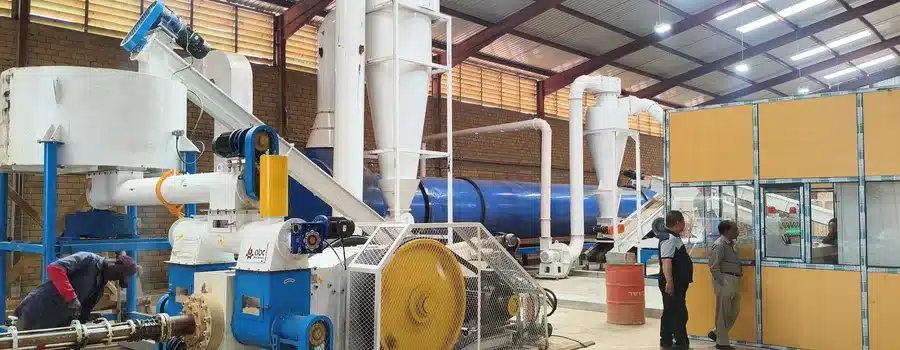
Refuse Derived Fuel Plant Processing Flow Display
- Mixing Ratios and Moisture Control
Blending sawdust at 25-40% weight ratio with RDF inputs like plastic film, fiber waste, or paper sludge balances density and burn profile. Initial moisture must be regulated under 15% for efficient compression.
- Pelletizing Equipment and Operating Parameters
Ring die pellet mills are preferred for RDF blends due to higher throughput (up to 2.5 tons/hour). Optimal compression pressures range from 160 to 220 bar, and die temperatures are maintained between 90°C and 120°C.
- Thermal Conditioning and Cooling
Pellets are conditioned post-compression via air cooling tunnels to prevent structural collapse. Surface moisture must be reduced below 5% within 5 minutes to retain pellet integrity.
Co-Pelletizing Process Optimization Parameters
| Step | Specification |
|---|---|
| Sawdust Proportion | 25–40% by weight |
| Input Moisture | <15% |
| Die Pressure | 160–220 bar |
| Pellet Diameter | 6–8 mm |
| Cooling Time | <5 minutes to <5% surface moisture |
- Binder Requirements: Often optional due to sawdust’s natural binding, but 1–2% starch can be added if needed.
- Output Density: Target bulk density of 600–720 kg/m³ for efficient storage.
- Machine Wear Prevention: Use anti-abrasive alloy dies to handle RDF’s heterogeneous nature.
Fine-tuned blending and equipment control enable efficient transformation of RDF and sawdust into stable, high-performing pellets.
Build your high-throughput RDF pellet line with sawdust integration—schedule a plant configuration session today.
Combustion and Emission Characteristics of Co-Pelletized Sawdust RDF

Rdf Mill Investment Cost Budget
Combustion tests reveal that sawdust RDF pellets provide 10–15% higher burnout efficiency compared to RDF-only blends, thanks to improved oxygenation and reduced volatile blocking.
Sawdust also lowers harmful emissions. Adding 30% sawdust reduces NO₂ emissions by up to 18% and dioxins by over 20%, due to more complete combustion and lower chlorine content.
Particulate emissions (PM10) remain under 50 mg/Nm³ with proper burner tuning. When paired with electrostatic precipitators, the system achieves over 95% dust removal efficiency, enabling regulatory compliance across EU and Asian markets.
Ensure clean combustion with sawdust RDF blends. Ask our team about complete emission control systems.
Industrial Application Cases and Performance Benchmarks
In a Central European cement plant, RDF pellets with 35% sawdust replaced 22% of coal consumption. CO? emissions dropped by 9,000 tons annually, with no kiln clogging events over 12 months of continuous operation.
Meanwhile, a textile plant in Southeast Asia installed a sawdust-RDF co-pellet system for its biomass boiler. Fuel cost was reduced by 30%, and ash disposal volume decreased by 40%.
- Performance Metrics: Thermal efficiency up to 88%, compared to 74% with RDF-only blends.
- Cost Savings: Pellet production costs range from $45 to $65/ton with sawdust, saving $20–$35/ton versus conventional RDF fuels.
- Technical Feedback: Operators report more stable flame and lower slagging in both grate and kiln combustion systems.
- Optimization Suggestion: Introduce automatic feed ratio adjustment based on feedstock moisture variation.
Field-tested data proves sawdust RDF pellets deliver not just energy gains but also smoother operations and better emission control.
Deploy high-performance RDF with sawdust today—request a pilot trial in your industrial system.