Rubber Waste Pellet Applications and Emission Control
Potential of Rubber Waste as RDF Fuel
Rubber waste is a promising candidate for RDF raw materials due to its high calorific value and consistent availability. Sources include end-of-life tires, rubber manufacturing residues, and vulcanized scrap. These materials typically deliver calorific values ranging from 25 to 32 MJ/kg, outperforming many biomass sources.
In comparison to textile or plastic waste, rubber-derived RDF exhibits a slower combustion rate, but sustained energy release. Compatibility tests show that blending rubber waste with high-volatile RDF inputs, such as plastics or paper, results in more stable combustion.
Enhance your RDF fuel strategy by integrating high-calorific rubber waste pellets, consult our specialists for tailored integration plans.
Emission Challenges and Control Strategies in Rubber Pellet Combustion
- Major Emission Types
Rubber waste contains sulfur compounds and halogenated additives that release pollutants such as SO₂, NO₂, and HCl during combustion. A typical RDF rubber pellet can emit up to 1.8 kg SO₂ and 1.2 kg NO₂ per ton if untreated.
- Pre-Treatment Impacts
Chlorine content in rubber waste varies between 0.2% and 0.8%. Washing rubber shreds or applying adsorbents like calcium carbonate during pelletizing can reduce HCl emissions by 40~60%. Binders with sorptive properties (e.g., clay-based) enhance pollutant capture.
- Post-Combustion Treatment
Flue gas scrubbing systems, including dry lime injection and semi-wet desulfurization units, are effective for SO₂ and HCl control. For NO₂ mitigation, Selective Non-Catalytic Reduction (SNCR) using urea injection is common in RDF applications.

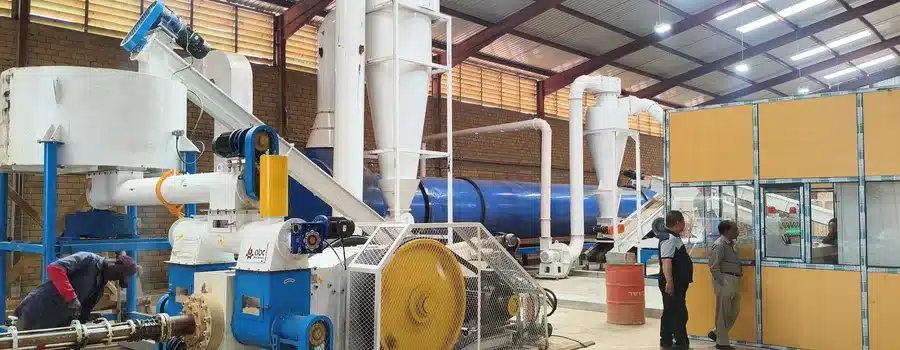
Making Rubber Pellet in RDF Plant
Comparative Emissions Analysis
| Parameter | Rubber RDF (Untreated) | With Pre-Treatment | With Full Control Systems |
|---|---|---|---|
| SO₂ Emissions (kg/ton) | 1.8 | 1.2 | <0.3 |
| NO₂ Emissions (kg/ton) | 1.2 | 0.9 | <0.25 |
| HCl Emissions (g/m²) | 650 | 310 | <100 |
Regulatory Compliance & Best Practices
- Pre-Washing: Use mechanical washing for tire granules to reduce surface contaminants.
- Additive Dosing: Apply magnesium hydroxide or dolomite during pellet formation.
- System Monitoring: Continuously track flue gas with inline sensors to keep emissions below EU RDF standards (e.g., SO₂ < 50 mg/Nm³).
Integrating these strategies can reduce rubber RDF emissions by over 85%, enabling its industrial-scale adoption without regulatory penalties.
Get a compliant, high-efficiency RDF combustion plan for rubber waste pellets; talk to our emission control engineers now.

Typical Industrial Applications of Rubber-Based RDF Pellets
Rubber waste pellets are already deployed in high-temperature systems like cement kilns and industrial boilers. In one Southeast Asian cement plant, 12% of thermal input is sourced from rubber pellet RDF, replacing 6,000 tons of coal annually.
Boilers in tire manufacturing facilities often reintegrate rubber-derived fuel, optimizing waste utilization and energy circularity. Trials indicate up to 28 MJ/kg effective energy release in kiln environments.
Cost analysis reveals savings of $20~$35 per ton of coal replaced. However, issues like ash deposition and combustion smell must be addressed through system calibration and flue gas polishing.
Partner with us to implement rubber RDF fuel solutions proven in cement and boiler systems across the globe.
Rubber Pelletizing Techniques and Process Selection

Rubber Pelletizing Plant for Sale
Choosing the right pelletizing equipment is essential. For rubber RDF, extrusion pelletizers with cooling jackets are favored due to high material elasticity. Capacity ranges between 1.2 and 2 tons/hour depending on pellet size (6~10 mm).
Binders such as polyethylene wax or lignosulfonate (at 1~4% dosage) improve pellet integrity and reduce smoke during combustion. Pellet hardness should exceed 70 N to withstand storage and transport shocks.
- Pelletizing Machine Types: Twin-screw extruders or flat die systems with enhanced cutting units.
- Binder Selection Guidelines: Avoid high-VOC binders; use inorganic additives for environmental compliance.
- Forming Method: Use low-temperature compression molding to maintain volatile balance.
Process optimization allows energy-efficient, low-emission rubber RDF pellet production with consistent combustion properties.
Design your rubber RDF pellet line with us—get a custom-engineered equipment and formulation plan today.
By leveraging RDF raw materials like rubber waste pellets, industries can reduce emissions, improve energy utilization, and meet sustainability mandates through practical and cost-effective combustion solutions.