Biomass Fuel Potential of Garden Waste
Garden waste, comprising branches, leaves, grass clippings, and hedge trimmings, is a rich and renewable source for RDF raw materials. These residues are widely available through municipal landscaping programs and seasonal clean-up operations.
Typical calorific values for air-dried garden biomass range from 12 to 16 MJ/kg, depending on species and moisture level. Freshly collected grass clippings can contain up to 70% moisture, while dried twigs may hold less than 20%. This variation impacts energy recovery and processing efficiency.
Seasonality significantly affects feedstock planning. During autumn and spring, biomass availability can double, reaching 2-4 tons/day per urban zone. Proper collection, baling, and storage strategies help stabilize supply and reduce microbial decay.
Maximize your biomass fuel potential with RDF from garden waste¡ªreach out to us for customized sourcing and drying strategies.

Process Design for Clean Garden Waste RDF Pellet Production

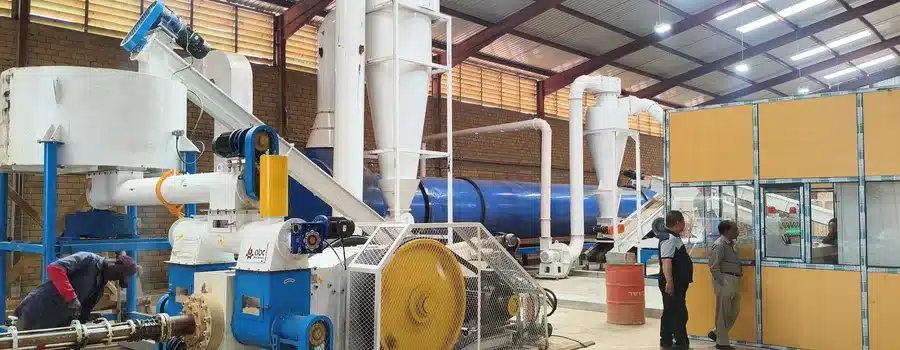
Waste RDF Pellet Production Plant
Shredding and Drying Requirements
Garden biomass is shredded to under 20 mm for uniform drying and pelletizing. Rotary drum dryers or belt dryers achieve 10%–15% final moisture at a throughput of 1.5–2.5 tons/hour. Inline sensors track moisture in real-time to avoid overdrying.
Pollution Control During Pelletizing
To prevent odor and VOC (volatile organic compound) emissions, pre-treated garden waste is stabilized with additives like bentonite or lime at 1–2% inclusion. Dust collection systems at critical points reduce PM2.5 emissions by over 85%.
Optimization of Pellet Density and Diameter
Target pellet density is 600–700 kg/m³, achieved through die compression at 100–140°C and 160–200 bar. Diameter is typically controlled at 6–8 mm for use in standard biomass boilers.
RDF Pelletization Parameters Overview
| Parameter | Target Value |
|---|---|
| Final Moisture | 10-15% |
| Pellet Diameter | 6-8 mm |
| Bulk Density | 600-700 kg/m? |
| Die Temperature | 100-140¡ãC |
| Compression Force | 160-200 bar |
- Binder Use: Starch- or cellulose-based binders at 1-3% enhance mechanical strength.
- Pellet Durability Index: Must exceed 95% to avoid fines during handling.
- Emission Control Setup: Includes cyclone separators and HEPA filters in exhaust lines.
Implementing these engineering measures results in consistent, clean RDF pellets from varied garden biomass sources—ready for industrial combustion systems.
Develop a turnkey clean RDF pelletizing line for your green waste—consult our biofuel process engineers today.
Renewable Energy Benefits of Biomass RDF

RDF Processing Plant Handles a Variety of Raw Materials
Biomass-derived garden waste pellets serve as a carbon-neutral RDF fuel, helping replace fossil sources like coal and heavy oil. Every ton of biomass RDF offsets up to 1.5 tons of CO₂, depending on displacement ratios.
Emissions from clean garden RDF are significantly lower: NO? values remain below 150 mg/Nm³, while SO? and particulates are often within regulatory thresholds without scrubbing. This makes it compatible with green energy regulations across Europe and Asia.
Additionally, integrating garden biomass into local energy loops supports circular economy models—reusing municipal green waste as clean energy with minimal transport and disposal costs.
Join the shift to circular energy with clean RDF from biomass—partner with us to align with your region’s sustainability roadmap.
Case Studies of Garden Waste RDF in Industrial and Municipal Projects
In a Scandinavian district heating plant, co-firing garden RDF pellets at 20% alongside wood chips delivered 86% combustion efficiency, with annual CO₂ savings of 4,200 tons. Maintenance costs dropped 10% due to reduced slag formation.
Meanwhile, a Southeast Asian municipality deployed a 5-ton/day RDF pellet line for its urban parks department, supplying green fuel to a nearby cement kiln. Payback on equipment investment was achieved within 24 months through avoided landfill fees and fuel substitution.
- CAPEX Overview: Small-scale RDF lines cost $250,000–$500,000.
- Operational costs are $35–$55 per ton produced, depending on automation level.
- Challenges: Inconsistent moisture in rainy seasons and fiber variability.
- Optimization Tip: Install biomass silos with aeration to extend storage life.
These examples prove that clean RDF pellets from green waste not only support environmental goals but also deliver tangible operational savings.
Explore real-world RDF green fuel success and book a site analysis with our implementation experts today.