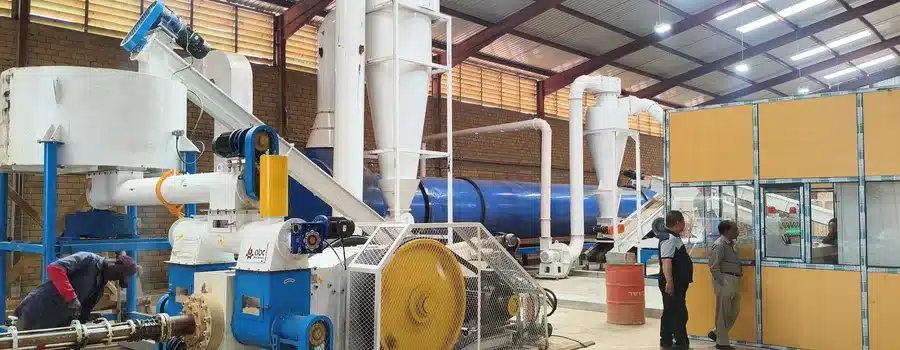
Method of Pelletizing Agricultural Waste for RDF
Fuel Properties and Pelletization Compatibility of Agricultural Waste
Agricultural residues—such as rice husks, corn cobs, wheat straw, and sugarcane bagasse—are widely available feedstocks for RDF raw materials. These residues contain high levels of cellulose and lignin, making them combustible with calorific values between 13 and 18 MJ/kg.
Moisture content is a major concern, with raw straw reaching up to 45%, while sun-dried corn cobs drop to 15–20%. Pre-drying is necessary to enhance combustion and pelletization performance. Bulk density for loose straw is low (60–80 kg/m³), increasing storage and logistics costs.
Unlock high-energy, low-cost RDF solutions from agricultural residues—reach out for a custom pelletization plan today.
Key Engineering Pathways for Agricultural RDF Pellet Production

Complete RDF Process Flow Chart
Pre-Treatment and Shredding
Agricultural residues must be shredded into particles <30 mm using hammer mills or rotary choppers. Drying is performed via drum dryers or solar-assisted tunnels to reduce moisture to 10°C–15%, with throughputs of 1.5–3 tons/hour.
Pelletizing Technology and Temperature Control
Pelletizing machines must handle fibrous materials effectively. Flat die or ring die pellet mills with compression forces of 180–220 bar and die temperatures of 90–120°C are typically used for RDF-grade pellets.
Binder Selection and Structural Stability
Binders such as starch, lignosulfonates, or molasses (1–4%) are added to enhance cohesion and pellet durability. Target durability index >95% ensures resistance to mechanical stress during transport and storage.
Agricultural RDF Pellet Process Parameters
| Process Stage | Optimal Setting |
|---|---|
| Moisture Reduction | Final moisture < 15% |
| Pellet Diameter | 6-8 mm |
| Die Temperature | 90°C–120°C |
| Compression Pressure | 180-220 bar |
| Binder Dosage | 1-4% |
- Material Compatibility: Ensure uniform fiber length and particle shape.
- Energy Efficiency: Maintain specific energy usage under 180 kWh/ton.
- Contaminant Control: Screen raw material for silica and dirt to protect die wear.
With robust engineering controls, agricultural waste can be efficiently transformed into durable, energy-rich RDF pellets ready for industrial use.
Build your agricultural RDF line with our process engineers—custom pellet solutions available for every residue type.

Impact of Blending Strategies on RDF Performance
Blending agricultural residues with industrial waste—like paper sludge, textile scraps, or packaging film—enhances RDF fuel properties. Straw alone has low bulk density and inconsistent burn behavior; blending improves energy output and reduces slagging.
Co-blending rice husk with 30% plastic packaging waste increased calorific value from 15.2 to 23.5 MJ/kg. Ash content dropped from 18% to under 9%, with a 25% reduction in unburned carbon.
Emissions from mixed RDF vary based on component ratios. Proper blending ensures lower SO₂ and NO₂ levels while maximizing burn completeness. Life cycle assessments show blended RDF reduces GHG emissions by 20–30% compared to coal.

Refuse-Derived Fuel Plant for Sale
Need expert RDF blending formulation? We offer testing and ratio optimization tailored to your residue and system.
Agricultural RDF Pellet Applications in Regional Energy Systems
In Eastern Europe, agricultural RDF is used in rural district heating systems. One project using 3,000 tons/year of corn stover RDF achieved 85% thermal efficiency and CO₂ emission cuts of 5,600 tons/year.
Greenhouse farms in Asia employ sugarcane RDF pellets to reduce LPG consumption by up to 40%. Return-on-investment was achieved in less than 18 months due to savings in fuel costs and carbon credits.
- Economic Viability: Pellet production cost ranges from $35 to $50/ton; fuel savings up to $70/ton vs. coal.
- Scalability: Modules range from 0.5 to 5 tons/hour capacity.
- Challenges: Seasonal feedstock fluctuations; logistics coordination for large-volume sourcing.
- Recommendations: Establish local cooperatives for residue supply and implement real-time moisture monitoring.
Real-world cases confirm that agricultural RDF solutions can scale effectively across rural and peri-urban industrial zones.
Discover localized RDF solutions for your agricultural community—consult us to deploy energy-efficient pellet systems.