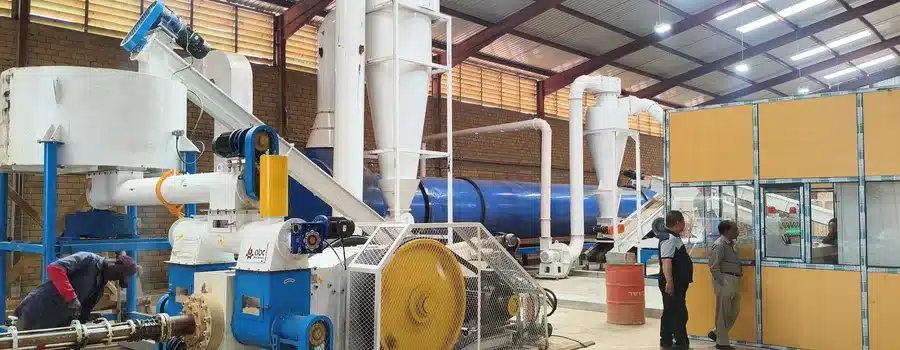
What is RDF Pelletizing Process
Engineering Value and Conversion Advantages of RDF Pelletizing
The RDF pelletizing process plays a pivotal role in transforming heterogeneous waste streams into high-density, easy-to-handle fuel formats. Pelletizing increases volumetric energy density by up to 40%, enabling more efficient storage and transportation. For example, bulk RDF may have an energy density of ~8 GJ/m³, while RDF pellets can reach over 11 GJ/m³.
Pelletized RDF also burns more uniformly in combustion systems, supporting stable energy output and reducing unburned residues. This improves compatibility with existing biomass or coal co-firing equipment without major retrofits.
Pelletizing adds commercial value by transforming unrefined RDF into a marketable fuel product with defined specifications and enhanced logistics.
Transform waste into dense, energy-rich fuel pellets – Consult with our engineering team today to explore RDF pelletizing opportunities.

Common RDF Pelletizing Technologies
Compression Molding vs. Extrusion vs. Ring Die Pelletizing
Three main types of RDF pelletizing equipment dominate the market, each with specific operational profiles:
- Compression Molding (Flat Die): Uses reciprocating pressure to shape RDF into pellets. Suitable for low-capacity lines (1–3 tons/hour). Lower investment but limited durability and throughput.
- Extrusion Pelletizers: RDF is forced through a die via rotating screw mechanisms. High mixing and shaping control, ideal for sticky or mixed RDF. Throughput ranges from 2–6 tons/hour. Energy-intensive but compact in size.
- Ring Die Pelletizers: Most industrialized format, processing 3–12 tons/hour. Feedstock is compressed through a perforated ring by rollers. Offers high output, consistent pellet shape, and good mechanical strength.

Ring Die Pellet Machine Turn Waste into Biofuel
Pellet Size, Strength, and Durability
Target RDF pellet size typically ranges from 10 to 25 mm in diameter and 30–50 mm in length. Pellet durability index (PDI) must exceed 90% to ensure mechanical stability during handling and storage. Mechanical compression pressure varies by machine type, generally between 120–180 MPa.
Fault Rates and Maintenance Needs
Extrusion systems require more frequent screw maintenance (~every 400 hours), while ring die systems can operate for up to 800 hours before service. Average fault rates in automated ring die lines are below 2%, ensuring stable mass production.
Comparison Table: RDF Pelletizing Equipment Types
| Type | Capacity (T/H) | Maintenance Interval | Best Use Case |
|---|---|---|---|
| Flat Die | 1–3 | Every 250 hours | Small batch RDF fuel lines |
| Extrusion | 2–6 | Every 400 hours | Sticky/plastic RDF blends |
| Ring Die | 3–12 | Every 800 hours | Large-scale, continuous operations |
- Flat Die:Cost-effective for small-scale RDF fuel production.
- Extrusion:Ideal for RDF with binders or complex compositions.
- Ring Die:Best for industrial-grade RDF pelletizing with high output and consistency.
Technology choice depends on feedstock type, throughput goals, and fuel specification requirements.
Contact us to select the optimal pelletizing system for your RDF conversion line.
How Process Parameters Affect RDF Pellet Quality
High-quality RDF pellets require precise control of forming conditions. Key rdf pellet quality control factors include:
Temperature, Moisture, and Pressure
- Pelletizing temperature should remain between 80–130°C to activate natural binders and soften plastics for cohesion.
- Feedstock moisture must be within 8–14%. Too wet reduces pellet density; too dry increases brittleness.
- Compression pressure needs tuning based on RDF bulk density and target hardness (typically 120–160 MPa).
Binder Usage
Binders like starch, molasses, or polymer emulsions are added at 2–6% by weight to improve pellet cohesion. Improper dosing can reduce calorific value or compromise mechanical strength.
Uniformity across pellet size, shape, and density is essential for efficient combustion and supply chain reliability.
Improve RDF pellet quality and minimize reprocessing losses with smart parameter control—Get in touch with our specialists today.
Energy and Integration Considerations in RDF Pelletizing
The pelletizing step consumes 15–25% of total line energy, depending on equipment efficiency and automation level. A typical ring die pelletizer uses 132–250 kW motors, equating to 15–25 kWh/ton of RDF processed.

RDF Pellet Production Plant Line for Sale
System Integration with Pre-Drying and Feeding
Proper integration with drying systems ensures that feedstock enters the pelletizer at optimal temperature and moisture. Feed hoppers with anti-bridging design, live bottom bins, and screw feeders provide stable flow.
Real-time communication between drying, feeding, and pelletizing units reduces line stops and improves output by 10–15%.
Automation and Control
SCADA-based systems and PLCs enable unified operation across all RDF line components, from shredder to pellet packer. This reduces manpower needs and improves uptime by 20%.
Design a fully integrated RDF pelletizing line to maximize fuel output and operational stability—Speak with our engineering consultants today.