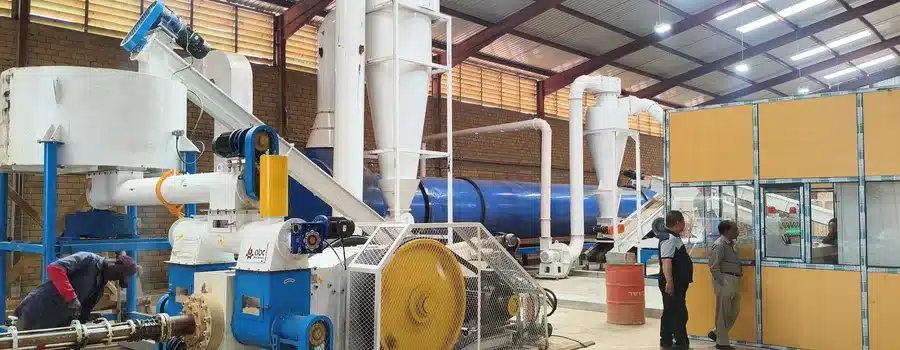
Cooling Machine and Packaging Machine in RDF Manufacturing Process
Why RDF Must Be Cooled and Packaged After Pelletizing
The final steps of the rdf manufacturing process—cooling and packaging—are crucial for preserving the structural and energetic integrity of RDF pellets. Post-pelletizing, pellets can reach surface temperatures of 70–90°C, which poses risks of deformation and spontaneous combustion if not cooled.
Cooling stabilizes the fuel’s shape and hardness, preventing compression-induced cracks during packaging and transport. It also reduces residual surface heat that would otherwise lead to moisture reabsorption, raising water content by 2–4% within 24 hours in uncontrolled environments.
Proper packaging not only protects the fuel from humidity and dust contamination but also enhances storage and transportation logistics. Bulk pellets without packaging degrade up to 20% faster in humid conditions.
Secure your RDF fuel’s performance by implementing a robust cooling and packaging system tailored to your storage conditions.


Common Cooling Technologies and Equipment Types
Air and Fan-Based Cooling Systems
Air cooling systems are the most widely used method for RDF pellet temperature reduction. Forced ambient or conditioned air flows through cooling towers or tunnel systems, reducing pellet temperature from 80°C to below 35°C within 10–15 minutes.
- Vertical counterflow coolers: Used in ring die lines, capacity 5–20 tons/hour.
- Horizontal belt coolers: Suitable for bulkier or fragile pellets, allow extended airflow contact time.
- Fan-assisted bin coolers: Compact and economical for small-scale operations.
Water Bath and Mist Cooling
In cases where RDF includes high-plastic or sticky material content, water mist cooling is used for faster surface temperature control. However, excessive moisture can cause pellet swelling or disintegration, so these systems require post-drying steps.
Cooling speed affects fuel stability directly. Rapid cooling within 15 minutes reduces the risk of internal stress fractures and improves mechanical strength by up to 25%.
Automation in Cooling Channels
Automated cooling tunnels integrated with conveyor systems enable synchronized processing, minimizing manual handling. PLC-controlled airflow and temperature sensors optimize efficiency and fuel quality consistency.
Cooling System Comparison for RDF Pellet Lines
| System Type | Capacity (T/H) | Cooling Time | Recommended Use |
|---|---|---|---|
| Vertical Air Cooler | 5–20 | 10–15 min | Standard RDF pellets |
| Belt Cooler | 3–12 | 15–20 min | Delicate or mixed RDF |
| Mist Cooling | 4–8 | 5–10 min | Plastic-rich RDF |
- Air Systems:Efficient, low-cost, minimal water usage.
- Mist Systems:Fast but risk over-hydration.
- Automation:Ensures process stability and lowers labor cost.
Cooling equipment selection should reflect RDF type, line throughput, and ambient facility conditions.
Need a cooling solution that keeps your RDF fuel safe and stable? Contact our equipment specialists now.

Packaging Formats and Storage Handling Requirements

Packaging Machine and Cooling Machine in Pellet Production Line
Packaging protects RDF pellets during transport and storage from environmental damage, contamination, and energy degradation. The main rdf bulk packaging methods include:
- Bulk loose: Delivered in containers or silos; economical but prone to moisture uptake. Ideal for short-term or in-plant transfers.
- Ton Bags (Big Bags): 500–1000 kg woven sacks; widely used for medium-volume RDF export. Stackable and easy to move.
- Compacted Bales: Compressed RDF pellets wrapped in film or tied. Excellent for long-distance shipping and minimizes space.
Protecting Against Moisture and Contamination
Using pellet bagging machines with automated sealing ensures minimal exposure to ambient air. Inner liners, vapor barriers, and desiccant packs can extend shelf life by up to 3 months under variable humidity.
Packaging also serves logistical purposes, such as clear labeling, traceability, and stacking stability.
Get packaging designs tailored to your RDF product specifications and customer needs—Start planning with our engineers today.
Impact of Storage Conditions on RDF Fuel Quality
Proper warehouse management is essential to maintain RDF fuel integrity over time. Ideal rdf storage conditions include:
- Humidity: Maintain below 65% relative humidity to prevent moisture gain.
- Temperature: Keep between 5–30°C to minimize degradation and microbial growth.
- Ventilation: Ensure air exchange to avoid heat buildup and gas accumulation.
Poor storage can lead to RDF pellet degradation of up to 15% in energy value over 90 days due to moisture absorption and microbial decay.
Fire prevention designs such as smoke detection, thermal sensors, and fire suppression systems must be integrated into RDF storage zones.
Protect your RDF inventory with advanced storage design that ensures safety, quality, and regulatory compliance.