Pre-Treatment Step for RDF Feedstock
The Importance of RDF Feedstock Pre-treatment
Refuse-derived fuel (RDF) preprocessing is a fundamental stage in the RDF processing chain. The importance of RDF pretreatment lies in its ability to improve the calorific value, reduce emissions, and enhance combustion efficiency. For instance, untreated RDF typically exhibits a heating value around 10–13 MJ/kg, whereas properly pre-treated RDF can reach over 18 MJ/kg.
Pre-treatment helps remove moisture, non-combustibles, and hazardous components that compromise RDF feedstock quality. Controlling these variables directly impacts the energy yield and reliability of the combustion system.
In high-volume waste-to-energy plants, consistent RDF quality through effective preprocessing ensures stable operation and compliance with emission standards. Moisture content, if left unaddressed, can exceed 35%, significantly reducing usable energy. Through appropriate preprocessing for calorific value, this can be reduced below 15%, aligning with optimal combustion conditions.
Partner with us to design RDF preprocessing strategies that boost energy yield and reduce system downtime.

Common RDF Pre-treatment Technologies

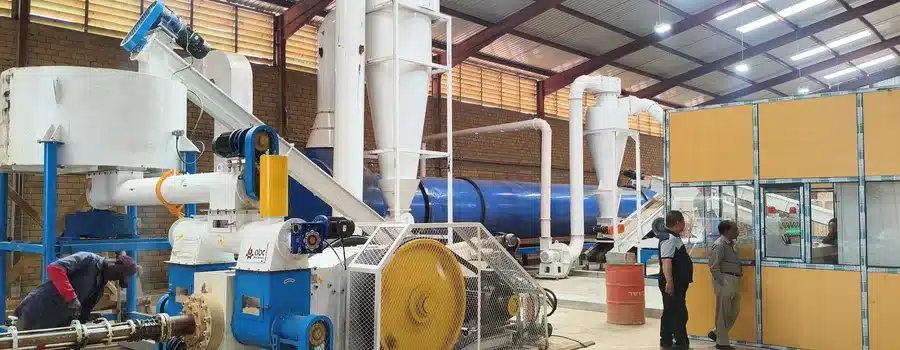
Sample Illustration of RDF Factory
Shredding and Screening for Size Reduction
Shredding is the first step in RDF feedstock conditioning. RDF shredding technologies reduce waste into uniform particle sizes, typically 30–80 mm, suitable for consistent combustion. Advanced twin-shaft shredders handle 20–30 tons/hour and can adjust output size by grid configuration. Following shredding, rotary or vibrating screens remove fine non-combustible fractions and segregate oversized items.
Drying Processes to Reduce Moisture
The RDF drying process is vital for improving fuel efficiency. Belt dryers and rotary drum dryers are commonly used, achieving moisture reductions from 40% to below 15%. Thermal energy recovery systems integrated with dryers can boost energy savings by 20–25%. These systems also prepare feedstock for pelletizing or briquetting in certain applications.
Sorting to Eliminate Non-Combustibles
Removing metals, glass, and other inerts is key to optimizing RDF combustion. Magnetic separators extract ferrous materials, while eddy current separators target non-ferrous components. Air classifiers and optical sorters further enhance separation, achieving contaminant removal rates above 90%. This improves boiler integrity and reduces ash content to as low as 10–15%.
Automation and Continuous Systems
Modern RDF preprocessing employs integrated, automated systems capable of 24/7 operation. These setups include programmable logic controllers (PLCs), sensor arrays, and robotic handling units. Such systems reduce labor costs by 30% and increase throughput by 40%.
Integrated RDF Pre-treatment Line Example
| Stage | Equipment | Capacity |
|---|---|---|
| Shredding | Twin-shaft shredder | 25 tons/hour |
| Drying | Rotary dryer with heat recovery | 15 tons/hour |
| Sorting | Magnetic + optical sorters | 30 tons/hour |
- Shredding & Screening: Ensures particle uniformity and removes fines.
- Drying Systems: Improve energy value by moisture reduction.
- Sorting Equipment: Removes harmful and non-fuel components.
- Automation: Boosts operational efficiency and consistency.
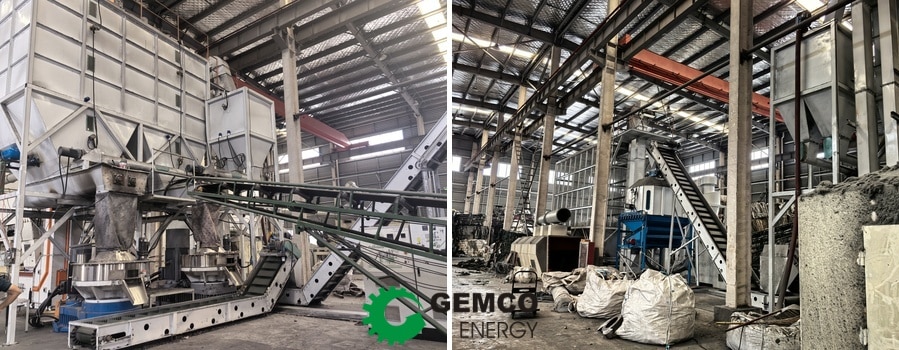
RDF Pellet Manufacturing Line
Get Your Customized RDF Pre-treatment System Plan – Contact Us Now
Quality Control Parameters for Calorific Value Optimization
To achieve high energy output, RDF processors must control physical and chemical parameters precisely. Key quality parameters in RDF include:
- Calorific Value (CV): Target CV ≥ 18 MJ/kg
- Moisture Content: Should be ≤ 15% for stable combustion
- Ash Content: Lower is better; ideal ≤ 20%
- Chlorine Content: Below 1% to reduce corrosion and dioxin risks
RDF feedstock is routinely analyzed using fuel analysis tools, including Near-Infrared Spectroscopy (NIR) and lab-based bomb calorimeters. Moisture analyzers can deliver real-time data with ±1% accuracy.
Standardizing feedstock inputs through process controls significantly reduces furnace corrosion and emissions variability. Setting acceptance thresholds, such as moisture ≤ 15% and Cl ≤ 0.6%, ensures compliance with energy plant standards.
Unlock consistent RDF performance by implementing precision quality control tools tailored to your process.
Matching Pre-treatment Solutions to Different Feedstock Types
Different waste sources demand tailored RDF preprocessing. Municipal waste RDF typically contains high moisture and a mix of plastics, organics, and paper. Industrial RDF feedstock, on the other hand, often includes drier, more homogeneous components like packaging waste or textile scraps.
For instance, household waste preprocessing often starts with intensive drying and biofraction separation. In contrast, industrial RDF lines may focus more on fine shredding and advanced sorting.
Establishing feedstock-specific preprocessing workflows ensures both energy efficiency and system durability. Processing 1 ton of mixed municipal waste with no pretreatment can result in energy loss of 4–6 MJ compared to optimized RDF with selective removal and drying.
Contact us to tailor RDF pre-treatment workflows that match your unique feedstock profile.