RDF Processing Raw Material Collection for Alternative Fuel
Overview of RDF Raw Material Types and Sources
Refuse-Derived Fuel (RDF) production involves various waste fuel sources including municipal solid waste (MSW), industrial by-products, and agricultural residues. These RDF raw material types directly influence fuel quality and operational efficiency.
For example, municipal solid waste contributes over 60% of RDF feedstock in many urban processing centers, with calorific values typically ranging from 12–18 MJ/kg. Industrial waste for RDF, such as packaging materials or plastic residues, can increase energy content to above 20 MJ/kg, though it requires more stringent sorting due to higher chlorine levels.
Different combustion systems demand different feedstock characteristics. Fluidized bed boilers, for instance, tolerate higher moisture content (up to 30%), whereas grate furnaces require more uniform particle sizes and lower moisture levels. Sourcing strategies must align with these technical requirements to optimize combustion efficiency and emissions control.
Sustainable Sourcing Strategies for Diverse Waste Materials
Creating a resilient RDF fuel supply starts with diversified, sustainable waste sourcing strategies. Establishing localized collection networks and industry partnerships ensures both stability and regulatory compliance.
Local Waste Collection RDF Strategies
Localized sourcing reduces logistics costs by up to 25–40% and enables better control over feedstock variability. Leading RDF facilities operate within a 50–80 km collection radius, collaborating with municipal systems and industrial zones to secure consistent input.
Pre-Treatment and Screening Protocols
Standardizing waste sorting, shredding, and drying processes ensures homogeneous feedstock with controlled moisture (below 20%) and chloride levels (below 0.8%).
Regulatory and Environmental Considerations
Regulatory compliance is crucial. In the EU, the Waste Framework Directive mandates pre-treatment for all RDF-bound waste and restricts landfilling of recyclable fractions. RDF facilities must demonstrate emissions compliance (e.g., EN 15359 standards) and traceable waste sourcing.
Key Sustainability Measures
| Strategy | Description |
|---|---|
| Local Partnerships | Engage with urban waste systems to source MSW under transparent contracts |
| Industrial Symbiosis | Exchange of by-products from local manufacturers for RDF use |
| Digital Tracking | Use of ERP and GPS tracking to ensure traceability and minimize illegal dumping risks |
- Waste Type Mapping: Conduct regional audits to identify high-volume sources of compatible waste.
- Supplier Agreements: Define composition, moisture limits, and delivery schedules with partners.
- Onsite Preprocessing: Invest in compact shredders and NIR (Near-Infrared Reflectance) sorters.
Long-term sustainability relies on reducing landfill dependency and integrating circular economy principles into sourcing plans.
Partner with our RDF specialists to develop a sustainable, regulation-compliant fuel sourcing network tailored to your facility’s needs.

Impact of Feedstock Choice on RDF Fuel Performance
Feedstock properties play a critical role in RDF quality. Metrics such as calorific value, moisture content, and chlorine levels determine both energy efficiency and equipment wear.
A well-formulated RDF blend should achieve a minimum calorific value of 17 MJ/kg, moisture below 20%, and chlorine content under 0.8%. High-chlorine PVC materials, if not sorted out, can elevate HCl emissions, requiring costly flue gas treatment.
When selecting feedstock, alignment with combustion system parameters is essential. For instance, cement kilns prefer higher calorific RDF (≥20 MJ/kg), while waste-to-energy plants accept broader ranges but demand fuel uniformity to stabilize output temperatures.
Consistent fuel quality also improves the lifespan of burners and heat exchangers by reducing slagging and corrosion risks.
⚠️ To ensure long-term operational stability, integrate a MES (Manufacturing Execution System) that monitors batch-wise fuel properties and adjusts preprocessing settings dynamically.

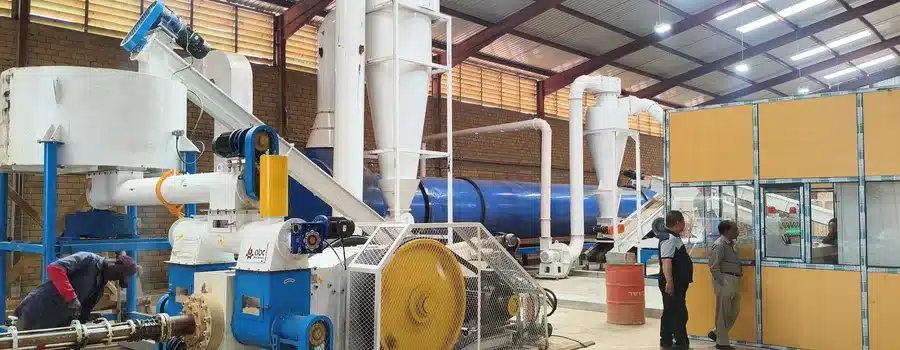
Showcase of RDF Pellet Processing Plant
Get Your Customized RDF Feedstock Selection Plan – Contact Our Engineers Today
RDF Sourcing Cost Control and Logistics Optimization
Efficient RDF fuel supply is not only about availability but also economics. Key cost drivers include:
- Waste acquisition price: USD 5–20/ton
- Pre-treatment energy costs: 4–6 kWh/ton
- Transportation: USD 0.05–0.12 per ton-kilometer
Optimizing logistics involves regional plant clustering and route planning. For example, deploying centralized preprocessing hubs can cut redundant transport miles by 30%, especially when located near high-waste-density zones.
Supply chain diversification is also critical—sourcing from at least three different types of waste streams lowers the risk of feedstock shortages during seasonal fluctuations.
By mapping waste availability and integrating real-time tracking systems, RDF processors can better manage cost volatility and ensure continuous fuel flow.
RDF processing remains central to waste-to-energy strategies worldwide. Leveraging alternative fuel from waste requires a balance of quality feedstock sourcing, sustainable practices, and cost-efficient logistics—backed by regulatory compliance and technical adaptability.
If you are struggling with your RDF production business plan, you can contact us for help to get your customized RDF processing solution, feasibility analysis, and technical consultation.