RDF Materials Shredding Machines
The Role of Shredding in RDF Pre-pelletizing Stages
Shredding is a fundamental pre-treatment process in RDF processing, especially before pelletizing. Effective particle size reduction ensures uniform feedstock flow and efficient compaction.
Typical RDF particle size requirements for pelletizing range between 10 mm and 40 mm. Without proper shredding, larger or inconsistent particles can jam pellet mills, reduce compaction efficiency, and increase equipment wear.
In most RDF systems, shredding is positioned directly after initial waste screening and before drying or pellet pressing stages. It directly influences subsequent thermal drying performance¡ªsmaller particles dry faster and more uniformly. For instance, RDF feedstock shredded to ≤ 20 mm dries up to 25% faster compared to larger fractions.
Shredding also boosts system automation by enabling steady material flow and reducing downstream equipment load fluctuations.
Types of RDF Shredding Machines and Their Mechanisms
Single Shaft vs. Dual Shaft vs. Quad Shaft
Each type of RDF shredding machine suits specific processing goals:
- Single Shaft Shredder: Ideal for dry, consistent waste. Processes 2~8 tons/hour with precise particle control using screens.
- Dual Shaft RDF Shredder: Suitable for mixed and moist waste. Can handle 5~25 tons/hour with robust shear force and low RPM.
- Quad Shaft Shredder: Designed for high-security shredding and fine particle control. Slower throughput (3~6 tons/hour) but delivers uniform sizing.
Shredding Mechanisms: Shearing, Tearing, Impact
- Shearing: Used in dual-shaft machines, applies torque to slice materials. Reduces noise and dust, ideal for rubber, textiles.
- Tearing: Common in single and quad shaft systems. Suitable for fibrous or soft waste streams.
- Impact: Found in high-speed granulators. Applies hammering force, suitable for pre-sorted.
Performance Comparison of RDF Shredder Types
| Shredder Type | Capacity (T/H) | Best For | Maintenance Frequency |
|---|---|---|---|
| Single Shaft | 2~8 | Dry plastics, packaging | Every 600 hours |
| Dual Shaft | 5~25 | Mixed urban/industrial waste | Every 400 hours |
| Quad Shaft | 3~6 | Precise, secure size reduction | Every 300 hours |
- Single Shaft£ºHigh-precision cutting and consistent sizing.
- Dual Shaft£ºVersatile for heavy-duty shredding, tolerant to impurities.
- Quad Shaft£ºBest for security-focused or fine-grade RDF.
Choosing the right shredding mechanism depends on feedstock composition, output size targets, and system integration requirements.

Contact us for expert recommendations on selecting RDF shredders that match your operational complexity and efficiency goals.

Impact of Shredding Equipment on Energy and Operational Efficiency
RDF shredders are power-intensive machines, with motors ranging from 45 kW to 250 kW depending on capacity. Understanding energy efficiency in RDF shredding is crucial for sustainable operation.
Modern shredders with smart drive systems can reduce idle energy by 15~20% and optimize torque based on material resistance. Additionally, auto-reverse functions prevent blockages, reducing downtime by up to 30%.

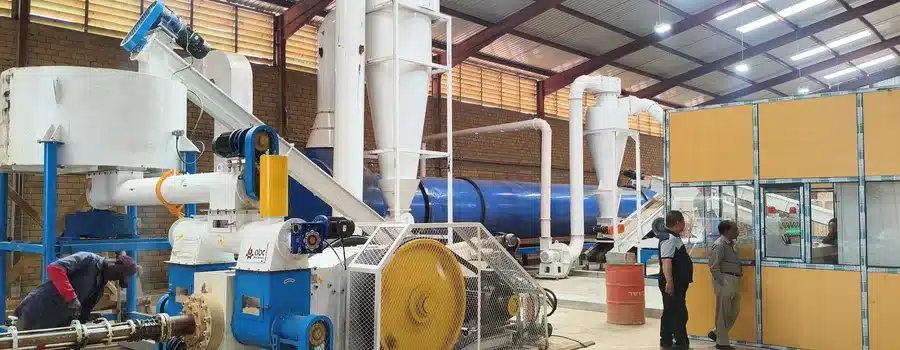
Shredding Machine In RDF Plant
Higher shredding efficiency improves entire RDF production flow, increasing output consistency and reducing operational cost.
A well-tuned system can achieve up to 95% shredding uptime, with output particle deviation under ±5 mm, reducing pellet press clogging events by 40%. Enhance your RDF processing performance by upgrading to intelligent shredding systems that cut costs and improve fuel quality.
Choosing the Right RDF Shredder Based on Feedstock and Throughput
Matching shredder type to feedstock and capacity is critical. For mixed municipal RDF material, dual-shaft shredders offer the best balance of durability and particle consistency. For homogeneous industrial RDF material, single-shaft machines deliver finer outputs at lower energy use.
Required hourly capacity also determines shredder selection. For example:
- 10 T/H production line with mixed plastic waste, dual-shaft, 132 kW motor, 20 mm screen
- 4 T/H textile-based RDF Single-shaft, 75 kW, adjustable knives
Output size uniformity is especially critical for pellet presses, where >90% of particles must fall within ±5 mm range. Improper sizing leads to increased maintenance and downtime.
Need help sizing and selecting your RDF shredder? Connect with our engineering team for custom equipment recommendations.