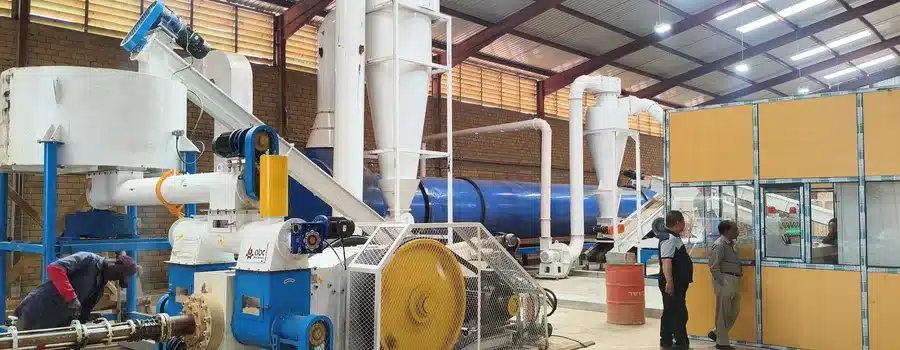
Automatic RDF Pellet Processing Plant
Automation in RDF Pellet Processing and Its Benefits
Automation plays a crucial role in optimizing RDF pellet processing, contributing to increased efficiency and reduced operational costs. By incorporating automation technologies, plants can streamline operations, improve precision, and significantly reduce manual labor. This results in enhanced productivity and improved safety, making the process more reliable and cost-effective.
For instance, automated systems can monitor and control the entire RDF pelletizing process, from material handling to pellet formation. This enables continuous and consistent production, reducing the variability that often comes with manual intervention. In addition, automated systems can collect real-time data to predict equipment failures, optimizing maintenance schedules and minimizing unplanned downtime.

Intelligent RDF Pellet Factory Interior Diagram
- Reduced Manual Labor and Human Error:
Automated systems reduce reliance on manual labor, minimizing human error in tasks like feedstock dosing, pellet length control, and drying temperature management. According to industry benchmarks, automation can improve process consistency by up to 20%, ensuring pellets meet strict quality parameters such as size uniformity and calorific value stability. This is especially important when supplying RDF to industrial clients like cement kilns or power plants that require reliable pellet fuel specifications.
- Improved Operational Efficiency:
By incorporating PLCs (Programmable Logic Controllers) and SCADA (Supervisory Control and Data Acquisition) systems, RDF plants gain real-time control over critical variables such as shredder speed, dryer temperature, and pelletizer pressure. These systems optimize energy consumption dynamically, helping plants reduce electricity and fuel use by 10–25%, depending on plant configuration. Automated feedback loops also reduce material losses and enhance throughput under varying feedstock conditions.
- Cost Reduction and Faster Payback:
While automation involves upfront investment, the long-term cost savings are significant for RDF processing plant. Reduced downtime, faster processing cycles, and minimized raw material waste contribute to operational cost reductions of 15–30%. Additionally, fewer labor requirements can cut payroll expenses, while predictive maintenance features reduce the frequency and severity of RDF pellet processing equipment failures—extending machine lifespan and lowering repair costs.
Incorporating automation in RDF pellet processing plants not only enhances operational efficiency but also provides long-term cost-saving benefits, which make it a critical investment for industrial-scale operations.

Impact of Digital Transformation on RDF Pellet Production Line Optimization
Digital transformation is significantly reshaping the RDF pellet processing industry by integrating advanced technologies such as Manufacturing Execution Systems (MES) and Internet of Things (IoT) devices. These digital solutions enable real-time monitoring and control of production lines, improving operational visibility and decision-making capabilities.
By implementing digital solutions, RDF pellet plants can achieve lean manufacturing practices, reducing material waste and optimizing production flow. Moreover, digital tools enable predictive maintenance, helping to reduce downtime and extend the lifespan of equipment. The integration of digital solutions also enhances product quality by providing real-time data on critical processing parameters.
- Lean Manufacturing Integration: By digitizing production workflows, RDF plants can adopt lean manufacturing principles with greater ease. Studies show that MES-integrated RDF production lines reduce raw material waste by 10–15% and improve equipment utilization rates by over 20%.
- Quality Control and Process Stability: Real-time data capture from IoT sensors allows for precise control of critical parameters such as shredder torque, drying temperature, pellet diameter, and moisture content. This results in consistent RDF pellet quality with less than ±5% variance in calorific value and mechanical strength. Instant alerts and automatic corrections also help maintain compliance with client specifications, especially important when supplying high-specification fuel to cement plants or industrial boilers.
- Predictive Maintenance and Downtime Prevention: Digital tools can predict when machinery will require maintenance, reducing unplanned downtime. Plants implementing predictive maintenance report up to 30% less unplanned downtime and 15–25% lower maintenance costs.
The digitalization of RDF pellet production lines enables better decision-making and continuous optimization of operations, significantly improving both output quality and process efficiency.

Complete Refuse Derived Fuel Pellet Processing Plant for Sale
To fully leverage the benefits of digital transformation, connect with our engineering experts and discover how our solutions can revolutionize your production line.
RDF Pellet Processing Optimization Strategies
Optimizing the RDF pellet processing involves focusing on several key areas, including energy efficiency, process stability, and equipment performance. One of the primary strategies is optimizing the heating process to ensure consistent pellet formation, while minimizing energy consumption.

RDF Pellet Processing Machine Operation
Key optimization strategies include:
- Optimizing Heating Systems: Using advanced control systems to maintain optimal temperature ranges during pellet formation, leading to improved quality and reduced energy costs.
- Enhancing Process Stability: Ensuring that the processing line operates within a narrow tolerance, improving the uniformity and reliability of the finished product.
- Energy Recovery Systems: Implementing energy recovery systems to reuse heat generated during the process, further reducing overall energy consumption.
These strategies collectively contribute to a more efficient and sustainable RDF pellet production process.
By optimizing key production steps, RDF pellet plants can significantly reduce operational costs and enhance product output.
The Impact of Automation and Digitalization on Return on Investment
The return on investment (ROI) from integrating automation and digitalization into RDF pellet processing plants is substantial. Not only do these technologies reduce operational costs, but they also improve the overall efficiency of the plant, leading to higher production output and profitability.
Investing in automated and digitalized systems allows companies to achieve higher operational uptime, faster processing times, and reduced material waste. These benefits directly contribute to a positive ROI, making the upfront investment worthwhile in the long term.
- Increased Productivity: Automation and digitalization enable continuous production with minimal downtime, resulting in higher output and profitability.
- Cost Efficiency: The reduction in energy consumption and material waste directly contributes to cost savings, enhancing the overall ROI.
- Sustainability: The integration of energy-efficient technologies also supports environmental sustainability, making the plant operations more eco-friendly.