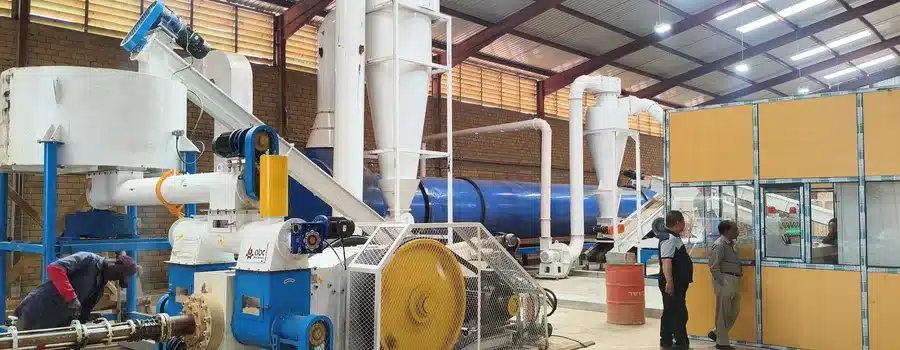
Designing an efficient RDF pellet plant starts with strategic site selection and a comprehensive understanding of the plant’s operational needs. The location must allow for easy access to both raw materials and transportation networks, reducing logistical costs. The average cost of transportation can account for up to 15% of the total plant expenses. Furthermore, the selected site should minimize environmental impact while ensuring compliance with local regulations, which may vary significantly across regions.

Different RDF Plant Layout Designs
Once the site is chosen, the focus shifts to the equipment layout and configuration. Optimized equipment placement reduces maintenance costs and improves production flow. For example, placing drying equipment closer to the material source minimizes energy consumption and processing time. To achieve an optimized design, it is critical to consider the following key factors:
If you are ready to begin your RDF pellet plant project, connect with our design experts to create a layout that fits your specific needs and improves overall plant performance.

The RDF pellet production line configuration is a critical factor in achieving high production efficiency. To maximize output, the production line should be carefully organized to reduce bottlenecks and delays. A well-configured line helps streamline processes and improves overall production performance.
In particular, the layout should include optimal placement of essential equipment such as shredders, pellet mills, and cooling systems. Raw material preprocessing (e.g., shredding or drying) is a crucial step that should be placed near the feedstock area to cut down on material transport time. Studies show that plant efficiency can be increased by up to 25% when production lines are properly configured.
A few optimization strategies include:
Contact us to learn more about how you can optimize your RDF pellet production line for maximum output and efficiency.
Establishing a solid investment budget for an RDF pellet plant is essential for managing costs and achieving desired returns. The budget should cover initial capital costs, operating expenses, and projected returns on investment (ROI). Without careful budgeting, the project could face financial challenges that may jeopardize its success.
One of the primary cost components is the capital expenditure (CAPEX) for equipment, installation, and construction, which can account for up to 40% of total project costs. Operational expenditure (OPEX), including maintenance, labor, and energy consumption, should be calculated accurately to avoid unexpected expenses during production.
Effective strategies for controlling costs include:
When planning the budget, it is crucial to estimate ROI and set realistic financial goals. An ROI of 15-20% is generally achievable within 3-5 years for well-optimized RDF pellet plants.
Before embarking on an RDF pellet plant project, a feasibility study is essential to ensure its long-term profitability. The study should examine the financial viability of the project, including ROI, payback period, and the potential for growth. Understanding market trends and demand forecasts is crucial for accurately estimating the financial returns from RDF pellets.
For example, the global demand for RDF as a sustainable energy source is growing steadily, with the market expected to expand by 5-8% annually over the next decade. Accurate demand predictions help inform investment decisions, ensuring that the plant can meet market needs and achieve a positive return.
Another key factor is calculating the payback period—the time it takes for the initial investment to be recouped. Typically, RDF pellet plant projects achieve a payback period within 4-7 years, depending on plant efficiency and market conditions.
Get in touch with our experts to conduct a comprehensive feasibility study and investment analysis for your RDF pellet plant project, ensuring a smooth and profitable implementation.