RDF Pellet Fuel Quality Standards for Market Access
Understanding RDF Pellet Fuel Standards
RDF (Refuse Derived Fuel) pellet fuel standards are essential for ensuring the quality and compliance of the produced fuel. These standards serve as the foundation for successful market entry and are regulated by both national and international bodies. Adhering to these standards ensures that RDF pellets meet the specific performance, safety, and environmental requirements that are crucial for industrial use.
Key regulations often include specifications related to calorific value, ash content, moisture levels, and harmful emissions. Compliance with RDF pellet fuel regulations can directly impact fuel efficiency, leading to lower operational costs and higher productivity. For instance, the calorific value of RDF pellets must typically range between 15 and 25 MJ/kg to be considered viable for energy production. Additionally, the moisture content should be under 10%, which is crucial for optimizing combustion performance.
To maintain the highest standards, manufacturers must ensure their products are certified by recognized organizations, such as the International Organization for Standardization (ISO), and local regulatory bodies. Failure to comply with these standards could result in suboptimal fuel performance, reduced operational efficiency, and increased emissions.
Some of the critical standards for RDF pellets include:
- Calorific value: A minimum of 15 MJ/kg for efficient combustion.
- Moisture content: Less than 10% for optimal fuel efficiency.
- Ash content: Must be carefully monitored to prevent over-accumulation during burning.
- Harmful emissions: Compliance with regulatory limits to minimize environmental impact.
In this context, understanding and implementing RDF pellet fuel standards is not optional; it is essential for achieving optimal fuel performance and long-term market success.
Ensuring compliance with these standards is not only a regulatory requirement but also a competitive advantage in the energy market.
Contact us now to learn how we can help you meet RDF pellet fuel standards and optimize your production process for maximum efficiency.

Key Manufacturing Processes to Meet RDF Standards
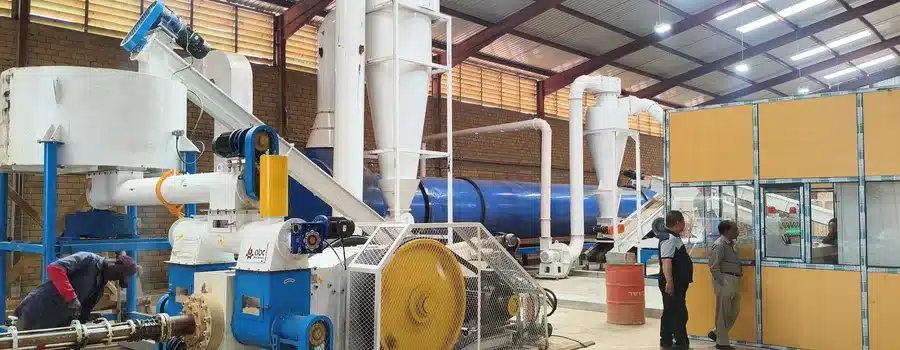
The manufacturing of RDF pellets requires specialized processes and equipment to meet stringent quality standards. The primary manufacturing process involves shredding and drying waste materials, followed by pelletizing the processed materials into uniform fuel pellets.
The pelletizing process is critical in shaping the fuel to meet specific quality metrics such as size and density. Specialized equipment like pellet mills and dryers are used to ensure that the pellets are consistent in size, reducing the risk of inefficient combustion and waste.
In addition to the pelletizing process, manufacturers must implement rigorous quality control measures to test the raw materials, in-process samples, and finished pellets. This includes checks for moisture content, particle size distribution, and combustibility. To ensure reliability, these tests should be conducted regularly using standardized procedures and equipment such as Near-Infrared Reflectance (NIR) analyzers.

RDF Pellet Production Flowchart for Simplified Operations
The following steps are commonly implemented to meet RDF pellet fuel standards:
- Raw material shredding: Consistent particle size for better pellet quality.
- Drying: To reduce moisture content to below 10%.
- Pelletizing: Using high-performance pellet mills for uniformity.
- Testing: Regular quality control tests to ensure compliance with specifications.
Partner with us to streamline your RDF pellet manufacturing processes and achieve compliance with international fuel quality standards.
Role of Equipment in Achieving RDF Pellet Quality
The selection of appropriate equipment plays a pivotal role in achieving the high quality necessary for RDF pellets. Pellet mills, grinders, and dryers must be carefully selected based on the type of raw material and desired output specifications.
Pelletizing machinery should be capable of producing uniform, high-density pellets to ensure efficient combustion. Additionally, the quality of pellets can be affected by factors such as the pressure applied during pelletizing and the temperature during drying. Manufacturers should also focus on maintaining equipment to avoid unexpected downtimes and ensure consistent production quality.
Some critical equipment choices include:
- Pellet mills: Essential for forming RDF pellets with desired density.
- Dryers: Key for reducing moisture to optimal levels for combustion.
- Grinders: Used for processing raw materials into uniform sizes.

Refuse Derived Fuel Pellet Machine for Sale
Contact us today for expert guidance on selecting and maintaining the right equipment for your RDF pellet production line.
Optimizing Factory Operations for RDF Pellet Fuel
Optimizing factory operations is key to improving efficiency and reducing costs in RDF pellet production. By streamlining production lines, manufacturers can enhance throughput, minimize energy consumption, and reduce operational downtime.
Operational efficiency can be achieved through several strategies, such as:
- Automation: Implementing automated systems to monitor and control the pelletizing process, reducing human error and improving consistency.
- Energy management: Optimizing energy use during the drying and pelletizing stages can significantly lower fuel costs.
- Process integration: Integrating systems like Manufacturing Execution Systems (MES) allows for better coordination between different stages of production, improving overall efficiency.
Optimize your factory operations and reduce costs by partnering with our experts to implement cutting-edge solutions in RDF pellet fuel production.