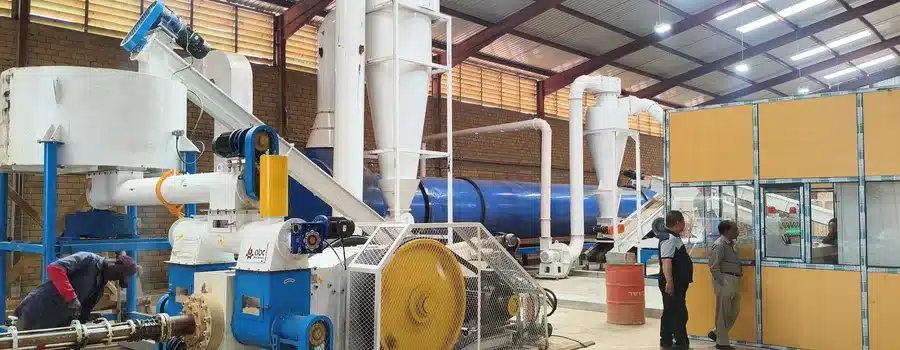
The process of manufacturing RDF (Refuse Derived Fuel) pellet fuel begins with the collection and sorting of waste materials. These waste materials, primarily from municipal solid waste (MSW), are subjected to various treatments such as shredding, drying, and screening. The goal is to remove contaminants and reduce the volume of non-combustible materials, leaving behind an efficient fuel source.

Refuse Derived Fuel Processing Flowchart
Waste materials are first collected from various sources, including residential, commercial, and industrial waste streams. The waste is then sorted to remove any non-combustible materials such as metals, glass, and plastics. This is a critical step in ensuring the quality and performance of the final RDF pellets. The resulting waste is then shredded into smaller pieces, which facilitates easier processing.
After sorting, the waste is shredded into uniform sizes, typically ranging from 1 to 3 cm in length. This shredding process is followed by drying to reduce moisture content. The ideal moisture content for RDF pellets is around 10-15%, as this improves combustion efficiency. Drying is usually achieved through rotary dryers or belt dryers, depending on the production capacity and scale of the operation.
Once the waste is shredded and dried, the material is passed through pelletizing machines, which compress the processed waste into dense, cylindrical pellets. The pelletizing process requires the right balance of pressure and heat to ensure that the pellets are of high quality and durability. The pellets typically measure 6-8 mm in diameter and have a high calorific value.
Key Equipment Used in RDF Pellet Production:
The quality of RDF pellets is closely monitored, with specific standards for particle size, moisture content, and calorific value.
Once the pellets are formed, they undergo cooling to prevent them from breaking during storage or transportation. The cooling process also helps to stabilize the chemical composition of the pellets.
RDF pellets must meet certain quality standards before they are ready for sale or use. These standards typically cover parameters such as calorific value, ash content, moisture level, and combustion efficiency. Manufacturers use advanced testing methods like Near-Infrared Reflectance (NIR) to analyze the composition and quality of the pellets.
RDF Pellet Fuel Quality Testing Includes:
To ensure market acceptance, RDF pellet manufacturers must adhere to international quality standards, which vary by region and market requirements.

RDF pellets are known for their high calorific value, which makes them an efficient alternative to traditional fossil fuels. The combustion performance of RDF pellets is critical for industries looking to optimize energy production while minimizing environmental impact.
The calorific value of RDF pellets typically ranges between 16 to 22 MJ/kg, depending on the waste material composition and the manufacturing process. This high energy content makes RDF pellets an attractive fuel source for power plants and industrial boilers.
RDF pellets exhibit excellent combustion efficiency due to their consistent size and low moisture content. The combustion process produces less ash and sulfur emissions compared to traditional coal, making RDF pellets a more environmentally friendly fuel option.
Compared to other alternative fuels, RDF pellets are more stable and reliable for industrial combustion applications.
By understanding the heat value and combustion characteristics, industries can make more informed decisions about integrating RDF pellets into their energy systems. Get in touch to discover how our RDF fuel production solutions can enhance your energy efficiency and environmental performance.
Ensuring that RDF pellets meet specific industry standards is crucial for their acceptance in the global market. Different regions have varying regulations and requirements for RDF fuel, so manufacturers must stay informed about the latest standards.

RDF pellets must comply with various international standards, such as the European EN 14961-1 standard for solid biofuels. These standards cover aspects like pellet size, moisture content, and calorific value, ensuring that the pellets meet the necessary performance criteria for industrial use.
Many industries require RDF pellet suppliers to have certifications such as ISO 9001 or ISO 14001, demonstrating their commitment to quality management and environmental sustainability. Manufacturers seeking to export RDF pellets must also consider the specific regulatory requirements of their target markets.
The global energy transition is driving demand for alternative fuels, and RDF pellets are well-positioned to play a significant role. As industries and governments focus on reducing carbon emissions and increasing the use of renewable energy, RDF pellets offer a promising solution.
The RDF fuel market has seen significant growth in recent years, driven by increasing demand from Europe, Asia, and North America. The global market for RDF pellets is projected to grow at a compound annual growth rate (CAGR) of 6.5% over the next five years.
As more industries shift toward cleaner energy alternatives, RDF pellets present a strategic opportunity for growth in the renewable energy sector. Explore our RDF pellet production solutions and join the global shift toward sustainable energy production.